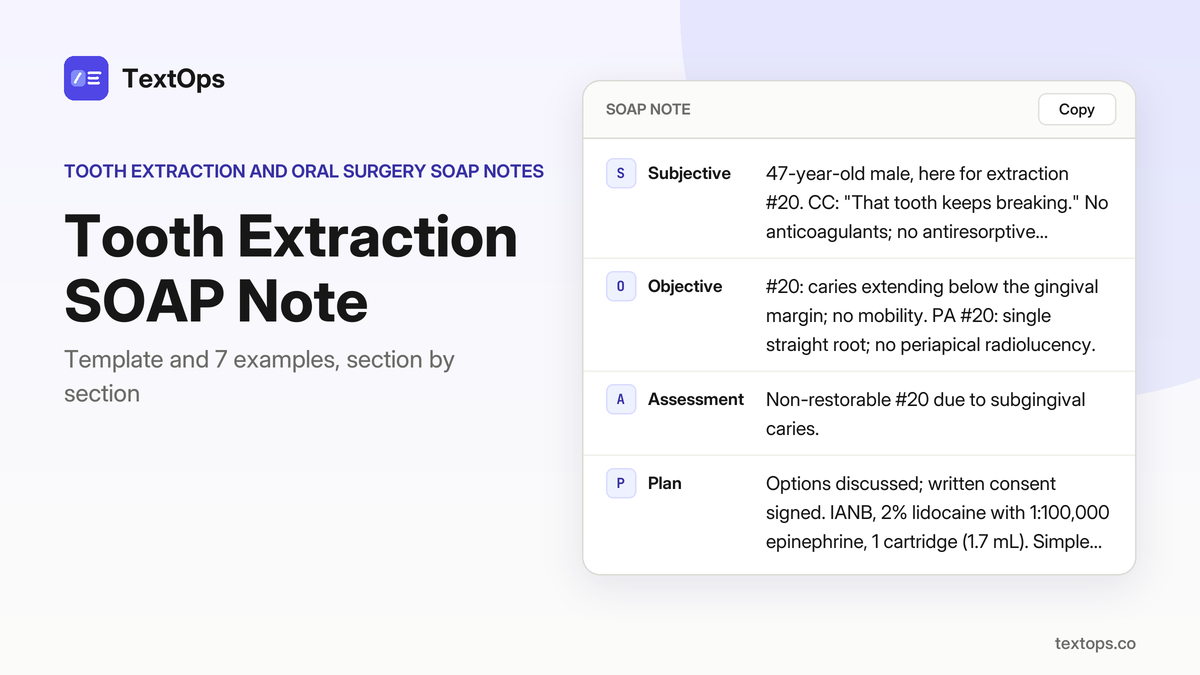
A tooth extraction SOAP note records why the tooth had to come out, what you found before you started, how you removed it, and what the patient needs to do next. This page gives you a copy-ready template, what to write in each section, and seven short examples, one for each common type of extraction. Each example links to a page with more notes of that type.
Teeth use Universal numbering (#1–32). The patients are fictional: replace every finding with what you actually saw and did.
Tooth Extraction SOAP Note Template
Copy the template and fill in the fields in braces. Delete any line that doesn’t apply.
- Subjective
- {age}-year-old {sex}, here for extraction #{tooth}. CC: "{patient's words}". Medical history: {conditions}. Medications: {list; note anticoagulants, antiplatelets, bisphosphonates or other antiresorptives}. Allergies: {list or NKDA}.
- Objective
- BP {value}, pulse {value}. #{tooth}: {caries, fracture, mobility, periodontal findings}. Radiograph ({PA / panoramic / CBCT}): {root number and shape, relation to the mandibular canal or sinus, periapical findings}.
- Assessment
- {Diagnosis that justifies extraction, e.g. non-restorable #{tooth} due to {reason}}.
- Plan
- Options discussed: {alternatives, including no treatment and tooth replacement}. Risks discussed: {pain, swelling, bleeding, infection, dry socket, nerve injury or sinus involvement where relevant}. Written consent signed. Anesthesia: {technique}, {agent and vasoconstrictor}, {cartridges (mL)}. {Simple / surgical} extraction #{tooth}: {instruments, flap, bone removal, sectioning}; {roots intact / root tips removed}. Socket {irrigated, curetted}; hemostasis with {gauze pressure / hemostatic agent / sutures: type and number}. Post-op instructions given verbally and in writing. {Medications or pain relief advice}. Next visit: {date and purpose}.
What to Write in Each Section
Subjective
- Reason for extraction, in the patient’s words if they have symptoms: pain, swelling, a broken tooth, or a referral for orthodontics.
- Medical history that changes the plan: anticoagulants and antiplatelets, bisphosphonates or other antiresorptive drugs, head and neck radiation, uncontrolled diabetes, bleeding disorders, pregnancy and heart conditions that may need antibiotic prophylaxis.
- Allergies, including to local anesthetics, latex and analgesics.
Objective
- Vital signs, at least blood pressure and pulse before anesthesia.
- The tooth: caries extent, fracture, mobility, probing depths and the state of the crown, which predicts whether it will break during removal.
- The radiograph: number and shape of roots, ankylosis, and the distance to the mandibular canal or maxillary sinus. Write which image you used and the date.
Assessment
Write the diagnosis that makes the tooth non-restorable or indicates its removal, not just “extraction #30”. Examples: non-restorable caries, vertical root fracture, periodontitis with hopeless prognosis, recurrent pericoronitis, orthodontic extraction. Add risk factors you identified, such as roots close to the mandibular canal.
Plan
- Consent: options offered (including no treatment), risks discussed, and that the patient signed.
- Anesthesia: technique, agent and vasoconstrictor, number of cartridges and total mL.
- Procedure: simple or surgical; flap, bone removal and sectioning if used; whether the roots came out intact; any complication such as a root tip left in place or a sinus communication.
- Hemostasis and closure: gauze, hemostatic agent, suture type and number.
- After care: post-op instructions, medications, and when to call.
- Next visit: suture removal, post-op check, or replacement planning.
Tooth Extraction SOAP Note Examples
| # | Example | Assessment |
|---|---|---|
| 1 | Simple extraction | Non-restorable #20 |
| 2 | Surgical extraction | Non-restorable #14, divergent roots |
| 3 | Wisdom tooth extraction | Partial bony impaction #17, recurrent pericoronitis |
| 4 | Broken tooth extraction | Crown fracture at the gumline #5 |
| 5 | Multiple extractions | Hopeless #2, #3, #4 from periodontitis |
| 6 | Extraction consultation | Vertical root fracture #3; on an anticoagulant |
| 7 | Post-extraction follow-up | Normal healing #14; sutures removed |
1. Simple Extraction
A simple extraction is a tooth removed with elevators and forceps, without a flap or bone removal.
- Subjective
- 47-year-old male, here for extraction #20. CC: "That tooth keeps breaking." Medical history: none. Medications: none. No anticoagulants; no antiresorptive history. Allergies: NKDA.
- Objective
- BP 128/82, pulse 72. #20: caries extending below the gingival margin on the distal, buccal cusp missing; no mobility. PA #20: single straight root, apex clear of the mental foramen; no periapical radiolucency.
- Assessment
- Non-restorable #20 due to subgingival caries.
- Plan
- Options discussed: root canal treatment with crown lengthening and a crown, extraction with later replacement, or no treatment. Patient chose extraction; written consent signed. IANB, 2% lidocaine with 1:100,000 epinephrine, 1 cartridge (1.7 mL). Simple extraction #20 with elevator and forceps; root intact. Socket irrigated with saline; hemostasis with gauze pressure. Post-op instructions given verbally and in writing. Over-the-counter pain relief reviewed. Next visit: replacement options in 6–8 weeks.
More examples: Simple Extraction SOAP Note.
2. Surgical Extraction
When you section a tooth or remove bone, say so and say why. That detail supports the surgical code and explains the longer recovery.
- Subjective
- 55-year-old female, here for extraction #14. CC: "Pain when I chew on the left." Medical history: hypothyroidism. Medications: levothyroxine. No anticoagulants; no antiresorptive history. Allergies: penicillin (rash).
- Objective
- BP 132/84, pulse 76. #14: large recurrent caries into the furcation, tender to percussion. PA #14: three widely divergent roots; floor of the maxillary sinus close to the palatal root apex.
- Assessment
- Non-restorable #14 due to caries into the furcation; divergent roots and sinus proximity.
- Plan
- Options discussed, including implant, bridge or no replacement. Risks discussed, including sinus communication. Written consent signed. Buccal and palatal infiltration, 2% lidocaine with 1:100,000 epinephrine, 2 cartridges (3.4 mL). Surgical extraction #14: crown sectioned with a bur under saline irrigation; MB, DB and palatal roots delivered separately with elevators; all roots intact. Nose-blow test negative; no sinus communication. Socket irrigated; 2 interrupted 4-0 silk sutures. Post-op instructions given verbally and in writing, including no nose blowing for 1 week. Over-the-counter pain relief reviewed. Next visit: 1 week for suture removal.
More examples: Surgical Extraction SOAP Note.
3. Wisdom Tooth Extraction
For third molars, record the impaction type, the tooth’s relation to the mandibular canal, and that you discussed the risk of nerve injury.
- Subjective
- 24-year-old female, here for extraction #17. CC: "My gum at the back keeps swelling." Three episodes of pericoronitis in the past year; none now. Medical history: none. Medications: combined oral contraceptive. Allergies: NKDA.
- Objective
- BP 118/76, pulse 70. #17: partially erupted, distal operculum, no swelling or purulence today. Panoramic: #17 mesioangular, partial bony impaction; roots superimposed on the mandibular canal, with no darkening of the roots or interruption of the canal outline.
- Assessment
- Partial bony impaction #17 with recurrent pericoronitis.
- Plan
- Options discussed: extraction or monitoring. Risks discussed, including dry socket and temporary or permanent numbness of the lip, chin or tongue. Written consent signed. IANB and long buccal, 2% lidocaine with 1:100,000 epinephrine, 2 cartridges (3.4 mL). Envelope flap; buccal and distal bone removed with a bur under saline irrigation; crown sectioned; tooth delivered in 3 pieces; roots intact. Socket irrigated; 2 interrupted 3-0 chromic gut sutures. Post-op instructions given verbally and in writing. Pain relief plan reviewed. Next visit: 1 week for post-op check.
More examples: Wisdom Tooth Extraction SOAP Note.
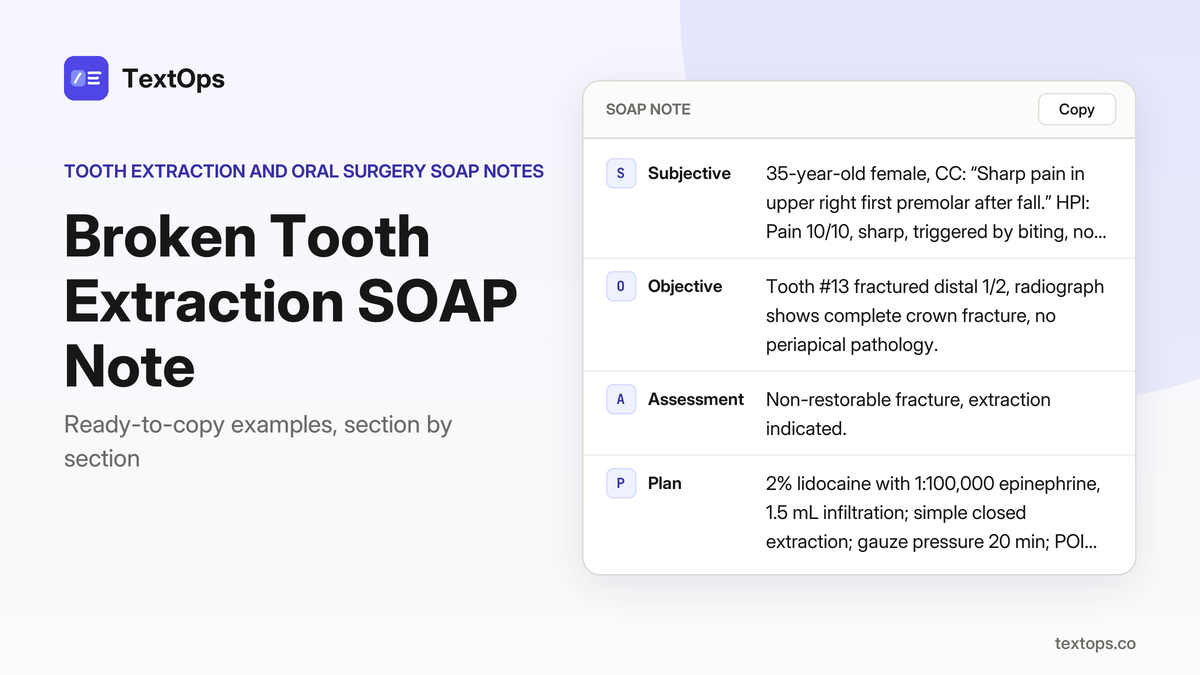
4. Broken Tooth Extraction
When the crown is gone, the note should show how the roots were removed and that none were left behind.
- Subjective
- 63-year-old male, here for extraction #5. CC: "The tooth snapped off while I was eating." Medical history: type 2 diabetes, last HbA1c 6.9%. Medications: metformin. No anticoagulants; no antiresorptive history. Allergies: NKDA.
- Objective
- BP 136/84, pulse 80. #5: root-canal-treated tooth, crown fractured at the gingival margin; root surfaces sound; no mobility. PA #5: buccal and palatal roots, root filling present; no periapical radiolucency.
- Assessment
- Non-restorable #5 due to crown fracture at the gingival margin.
- Plan
- Options discussed, including a post and crown with crown lengthening, extraction with later replacement, or no treatment. Patient chose extraction; written consent signed. Buccal and palatal infiltration, 2% lidocaine with 1:100,000 epinephrine, 1.5 cartridges (2.6 mL). Small envelope flap; roots separated with a bur and delivered with elevators; both roots intact, confirmed against the radiograph. Socket irrigated; 1 interrupted 4-0 silk suture. Post-op instructions given verbally and in writing. Over-the-counter pain relief reviewed. Next visit: 1 week for suture removal.
More examples: Broken Tooth Extraction SOAP Note.
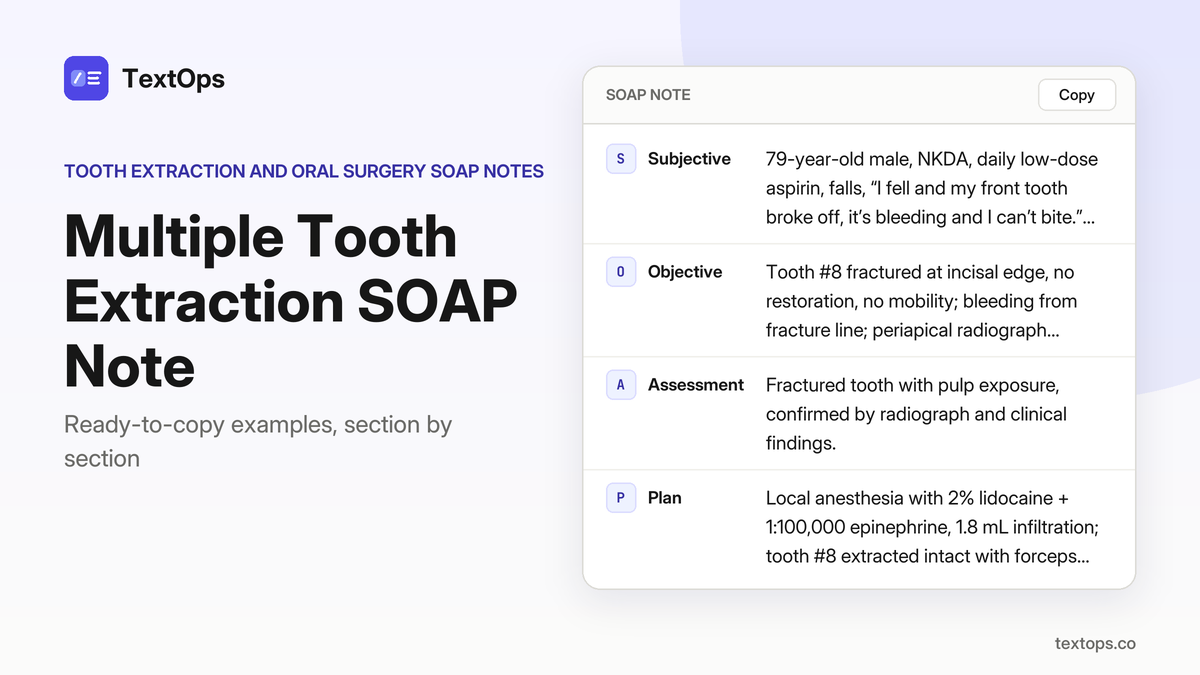
5. Multiple Extractions
List every tooth, and write the replacement plan so the note shows why several teeth came out at one visit.
- Subjective
- 58-year-old male, here for extraction #2, #3 and #4 before an upper partial denture. Medical history: hypertension. Medications: lisinopril. No anticoagulants; no antiresorptive history. Smokes 10 cigarettes/day. Allergies: NKDA.
- Objective
- BP 142/88, pulse 78. #2, #3, #4: mobility grade III, PD 8–10 mm, purulence on probing at #3. PA: bone loss to the apical third around all three teeth.
- Assessment
- Hopeless prognosis #2, #3, #4 due to periodontitis.
- Plan
- Options discussed, including the partial denture plan and no treatment; smoking cessation advised. Written consent signed. Buccal and palatal infiltration, 2% lidocaine with 1:100,000 epinephrine, 2 cartridges (3.4 mL). Simple extractions #2, #3, #4 with elevators and forceps; roots intact. Granulation tissue removed; sharp bony edges smoothed with a bone file. Sockets irrigated; 3 interrupted 3-0 chromic gut sutures. Post-op instructions given verbally and in writing. Over-the-counter pain relief reviewed. Next visit: 1 week for post-op check; partial denture impressions after healing.
More examples: Multiple Tooth Extraction SOAP Note.
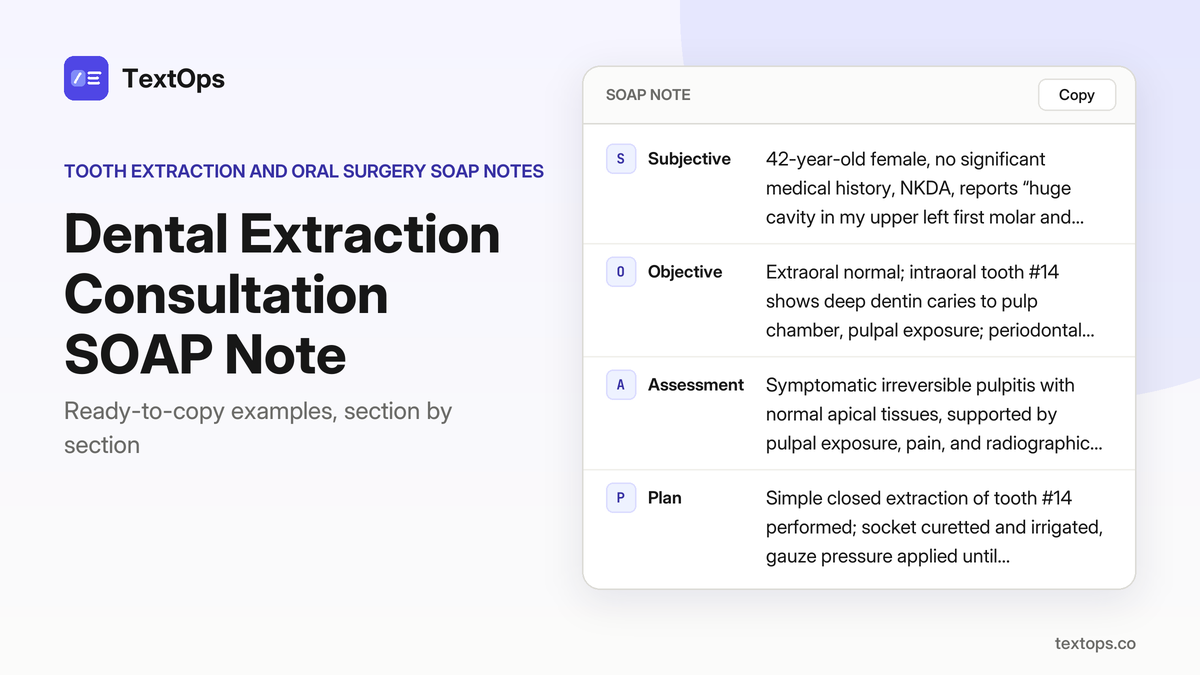
6. Extraction Consultation
A consultation note records the decision and the precautions, before anything is removed.
- Subjective
- 72-year-old female, referred for #3. CC: "Sharp pain when I bite on that side." Medical history: atrial fibrillation, osteoporosis. Medications: apixaban; alendronate for 3 years. Allergies: NKDA.
- Objective
- BP 134/80, pulse 74, irregular. #3: root-canal-treated, crowned; isolated 9 mm probing depth on the buccal; tender to percussion. PA #3: J-shaped radiolucency along the mesial root.
- Assessment
- Suspected vertical root fracture #3; hopeless prognosis. Bleeding risk from apixaban; low but present risk of medication-related osteonecrosis of the jaw (MRONJ) from oral alendronate.
- Plan
- Findings and options discussed: extraction with later replacement, or no treatment with monitoring. MRONJ risk explained. Patient told not to stop apixaban or alendronate without her physician's advice; letter sent to her physician about the planned extraction. Plan: extraction #3 with a gentle technique and local hemostatic measures. Next visit: extraction appointment after the physician's reply.
More examples: Dental Extraction Consultation SOAP Note.
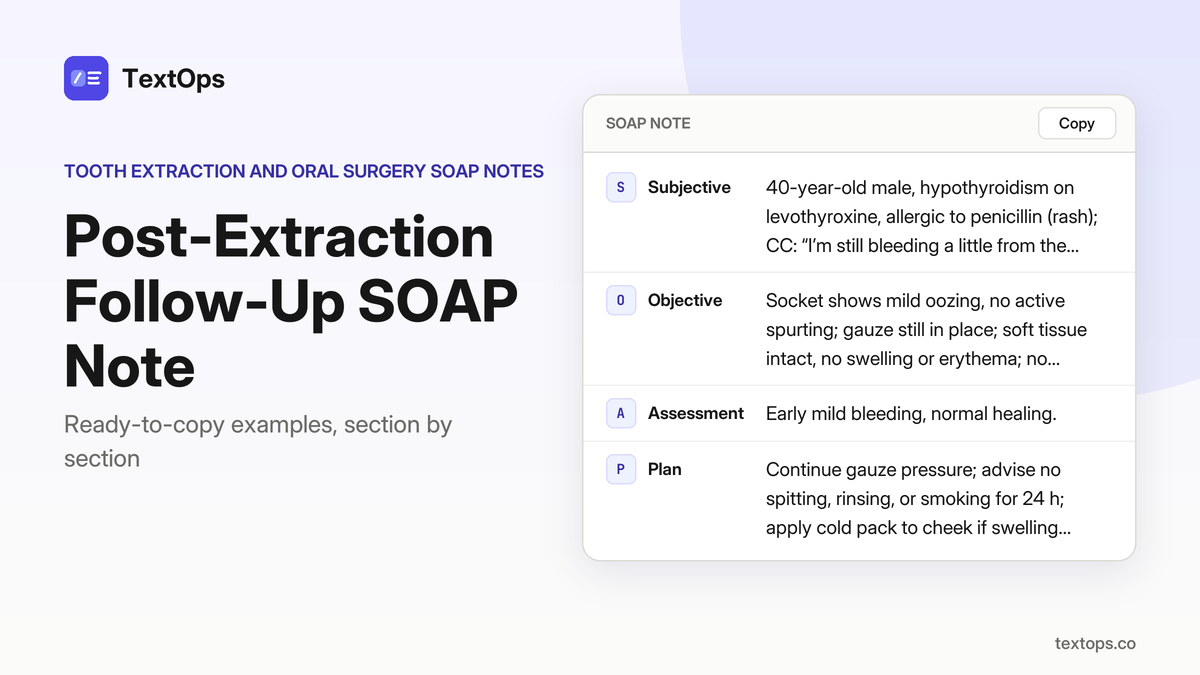
7. Post-Extraction Follow-Up
A short follow-up still needs findings, an assessment and the next step.
- Subjective
- 55-year-old female, 7 days after surgical extraction #14. Soreness for 3 days, none now. No bleeding, fever, bad taste, or air or fluid passing into the nose.
- Objective
- #14 socket: granulation tissue, no exposed bone, no swelling or purulence. Sutures intact.
- Assessment
- Normal healing, extraction site #14.
- Plan
- 2 silk sutures removed. Normal diet as comfortable. Replacement options discussed again; patient would like an implant. Next visit: implant consultation in 8–12 weeks.
More examples: Post-Extraction Follow-Up SOAP Note. For a dry socket note, see the dental SOAP note examples.
CDT Codes for Extractions
The note should support the code you bill. Check the current CDT manual for exact descriptors.
| Code | Procedure | What the note should show |
|---|---|---|
| D7140 | Extraction, erupted tooth or exposed root | Elevators and forceps; no flap or bone removal |
| D7210 | Surgical extraction of an erupted tooth | Flap raised, bone removed and/or the tooth sectioned |
| D7220 | Removal of impacted tooth, soft tissue | Impaction type from the radiograph |
| D7230 | Removal of impacted tooth, partially bony | Impaction type and bone removal |
| D7240 | Removal of impacted tooth, completely bony | Impaction type and bone removal |
| D7250 | Removal of residual tooth roots (cutting procedure) | Retained roots and the surgical access used |
Mistakes to Avoid
- “Extraction #20” as the assessment. Write why the tooth couldn’t be kept.
- No record of the options. Note that you offered alternatives, including no treatment, and that the patient chose extraction.
- Anesthesia without amounts. Record the agent, vasoconstrictor, technique and total mL.
- Not saying whether the roots came out intact. If a root tip was left in place, say so, why, and that you told the patient.
- Missing medication history. Anticoagulants and antiresorptive drugs change the plan, and their absence should also be recorded.
- No next step. Every note should end with the follow-up or replacement plan.
Frequently Asked Questions
What should a tooth extraction SOAP note include?
The reason for extraction and relevant medical history (S), the clinical and radiographic findings (O), the diagnosis that justifies removal (A), and consent, anesthesia, technique, hemostasis, post-op instructions and the next visit (P).
How do I document a simple vs a surgical extraction?
For a simple extraction, record that the tooth was removed with elevators and forceps. For a surgical extraction, record the flap, bone removal or sectioning, and why it was needed, such as divergent roots or a fractured crown.
Do I need a radiograph before an extraction?
A current radiograph of the tooth is standard before extraction. Record the type of image, its date and what it showed, especially root shape and the relation to the mandibular canal or sinus.
How should I record informed consent?
Write the options you discussed, including no treatment, the main risks, that the patient’s questions were answered, and that they signed the consent form.
What if a root tip is left behind?
Record its size and location, why it was left (for example, closeness to the mandibular canal or sinus), that you told the patient, and the follow-up plan.
For the general structure of a dental note, see the dental SOAP note template.
These examples show structure and wording only. The patients are fictional. Record what you actually found and did, and follow your practice’s documentation requirements and the rules where you work.