Dental Consultation SOAP Notes – 40 Ready-to-Copy Examples
A dental consultation is a focused encounter that may serve as an initial assessment, risk screening, or second-opinion review. The note records the patient’s chief complaint, relevant medical history, objective findings, and a concise assessment with a tailored plan. The following note exemplifies a typical consultation record.SOAP note
SSubjective
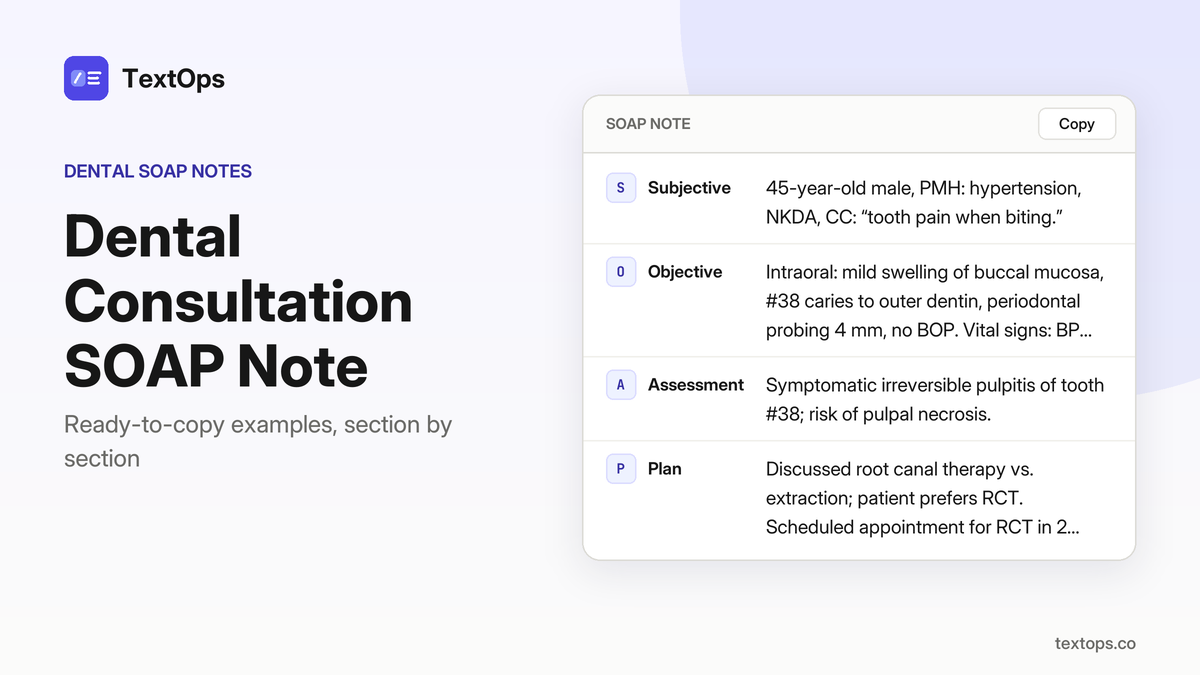
45-year-old male, PMH: hypertension, NKDA, CC: “tooth pain when biting.”
OObjective
Intraoral: mild swelling of buccal mucosa, #38 caries to outer dentin, periodontal probing 4 mm, no BOP. Vital signs: BP 138/84, HR 78.
AAssessment
Symptomatic irreversible pulpitis of tooth #38; risk of pulpal necrosis.
PPlan
Discussed root canal therapy vs. extraction; patient prefers RCT. Scheduled appointment for RCT in 2 weeks; prescribed ibuprofen 400 mg PRN.
Initial & Risk Screening
Routine First-Time Consultation – 25-Year-Old Male
SOAP note
SSubjective
25-year-old male, former smoker, NKDA, CC: “I’d like a full exam and cleaning, and to know if I need any fillings.” HPI: reports routine check-up, no pain, no sensitivity. PMH: none, no systemic signs.
OObjective
Extraoral: facial symmetry, no lymphadenopathy. Intraoral: mild gingival inflammation on #15, #16, #27, #28; no caries, no missing teeth. Periodontal: PSR 1 on all teeth. Radiographs: bitewing of all quadrants show no caries, mild interproximal bone loss on lower molars.
AAssessment
Low caries risk; mild gingivitis, supported by PSR 1 and mild gingival inflammation.
PPlan
Full mouth prophylaxis performed; fluoride varnish applied to all teeth; oral hygiene instructions given; patient advised to return for annual recall. No anesthesia or medication used.
Second-Opinion Consultation – 60-Year-Old Female with Endodontic Concern
SOAP note
SSubjective
60-year-old female, NKDA, daily low-dose aspirin; CC: “My lower right first molar has been painful for two weeks, especially when I bite down”; HPI: pain localized to #30, worsens with occlusion, no swelling or sinus tract; PMH: aspirin only; no systemic signs.
OObjective
Extraoral: no swelling, no lymphadenopathy; Intraoral: #30 tender to percussion, no swelling, no sinus tract; Periodontal: PSR 2 on #30; PA of #30: radiolucency at apex, no root resorption; Anesthesia: 2% lidocaine with 1:100,000 epinephrine, 1.8 mL (1 cartridge), IANB, aspiration negative.
AAssessment
Symptomatic irreversible pulpitis with acute apical periodontitis, supported by percussion tenderness, radiolucency at apex, and lack of root resorption.
PPlan
Discussed endodontic therapy; explained increased bleeding risk from aspirin; patient consented to postpone treatment until next visit; instructed to avoid hard foods; schedule root canal on next appointment; no medications prescribed today.
28-year-old female, 12 weeks pregnant, hypothyroidism on levothyroxine; CC: “I’m 12 weeks pregnant and want to make sure my teeth are healthy before the baby is born.” HPI: no pain, routine check, concerned about oral health during pregnancy. O: extraoral WNL; intraoral no caries, mild gingivitis on teeth #12-13; periodontal PSR 1; bitewing radiographs taken, panoramic declined; no systemic signs. A: low caries risk; mild gingivitis. P: performed full-mouth prophylaxis, applied fluoride varnish; instructed on diet and oral hygiene; no anesthesia or medication prescribed; scheduled follow-up in 6 months.
Dental Anxiety Consultation – 45-Year-Old Male
SOAP note
SSubjective
45-year-old male, no significant medical history, allergic to penicillin (rash), reports “I get very nervous in the chair and want to know how to manage it.” O: Extraoral: facial symmetry WNL. Intraoral: no caries, mild gingivitis on teeth #8 and #9. Periodontal: PSR 1, minimal BOP. A: Dental anxiety; mild gingivitis on #8, #9. P: Discussed behavioral techniques and nitrous oxide option, offered referral to a dental anxiety specialist, scheduled next visit for prophylaxis.
Consultation for Possible Oral Cancer – 70-Year-Old Male, Smokers
SOAP note
SSubjective
70-year-old male, smoker 5 cigarettes/day, controlled hypertension on lisinopril, NKDA; CC: “I’ve been smoking and want to check for any oral cancer signs.” HPI: patient reports a white patch on the right buccal mucosa, noted by himself during routine self-inspection.
OObjective
Extraoral: no cervical lymphadenopathy; Intraoral: white patch on buccal mucosa of right cheek, 8 mm, non-ulcerated, smooth surface; Periodontal: PSR 2 on all teeth; Radiographs: bitewing radiographs show no caries.
AAssessment
Suspected leukoplakia; refer for biopsy.
PPlan
Documented lesion, scheduled biopsy with oral surgeon, advised smoking cessation, provided written counseling on risk reduction, no anesthesia, no drugs prescribed, next visit in 4 weeks for follow-up and biopsy results.
Dental Implant Consultation – 55-Year-Old Female
SOAP note
SSubjective
55-year-old female, no significant medical history, NKDA, reports loss of lower right first molar and desire for an implant; no pain or swelling. O: Extraoral exam shows no facial asymmetry; intraoral exam confirms #30 missing with surrounding bone height 8 mm, no sinus tract; periodontal PSR 1 on adjacent teeth; panoramic radiograph demonstrates adequate bone volume and no pathology. A: Class I implant site with no contraindications, based on bone height, periodontal status, and radiographic findings. P: Discussed implant placement, obtained informed consent, scheduled surgical appointment, instructed on meticulous oral hygiene and postoperative care; no medications prescribed.
Dental Consultation for MRONJ Risk – 72-Year-Old Female
SOAP note
SSubjective
72-year-old female, asthma, albuterol PRN, NKDA, reports “I’m on bisphosphonates and want to know if I’m at risk for MRONJ.”
OObjective
Extraoral exam shows no facial asymmetry. Intraoral exam reveals no caries; mild gingivitis on tooth #24 and #25. Periodontal charting gives PSR 1. No systemic signs noted.
AAssessment
Low risk for MRONJ based on bisphosphonate therapy status, absence of invasive procedures, and mild periodontal health (PSR 1).
PPlan
No anesthesia used. Patient educated on strict oral hygiene, avoidance of extractions, and importance of regular recalls; next visit scheduled for routine monitoring.
50-year-old male, smoker 5 cigarettes/day, NKDA, CC: “I want to know what my insurance covers for a crown on #15.” HPI: patient seeks coverage information, no pain, no sensitivity.
OObjective
Extraoral: normal; Intraoral: #15 shows deep dentin caries on occlusal surface, no pulpal involvement; Periodontal: PSR 1; PA of #15: caries extending to outer dentin, no periapical pathology.
AAssessment
Deep dentin caries on #15; no pulpal involvement, periodontal health WNL.
PPlan
Discussed restoration options (direct composite or crown), provided insurance estimate, advised no anesthesia needed; scheduled definitive restoration in 2 weeks, instructed to maintain oral hygiene and avoid tobacco until treatment.
Dental Consultation – 55-Year-Old Male, Oral Cancer Screening
SOAP note
SSubjective
55-year-old male, seasonal allergies, NKDA; “I’d like a routine check-up and a cancer screen.” Past medical history unremarkable, no medications.
OObjective
Extraoral exam shows no lymphadenopathy; intraoral exam reveals no lesions, mild gingivitis on teeth #18 and #19; periodontal PSR 1; bitewing radiographs show no pathology.
AAssessment
Low risk for oral cancer; mild gingivitis on #18 and #19, supported by gingival inflammation and PSR 1 findings.
PPlan
Performed full-mouth prophylaxis and fluoride varnish application; instructed on brushing twice daily, flossing, and use of alcohol-free mouthwash; advised smoking cessation and regular self-examination; next recall scheduled in 6 months.
70-year-old female, type 2 diabetes on metformin, NKDA, reports “I feel my mouth is dry most of the day and it’s getting hard to chew.” History: xerostomia worsening over past month, no pain, no recent medication changes. O: Extraoral shows no facial asymmetry; intraoral dry mucosa, mild gingivitis on #11 and #12, no lesions; periodontal PSR 1; salivary flow 0.3 mL/min (low). A: Xerostomia secondary to diabetes, supported by low salivary flow, dry mucosa, and diabetic status. P: Advised sugar-free lozenges, saliva substitutes, and fluoride varnish application; instructed on adequate hydration and oral hygiene; no anesthesia used; scheduled follow-up in 4 weeks.
Dental Implant – Immediate Placement – 25-Year-Old Male
SOAP note
SSubjective
25-year-old male, former smoker, NKDA, reports “I have a gap in my lower right molars and want a quick fix.” HPI: wants immediate restoration of missing tooth #30. PMH: no systemic disease, no medications.
OObjective
Tooth #30 missing, socket intact, PA shows no periapical radiolucency, bone density adequate, no sinus communication, no active infection or swelling. Periodontal probing 2 mm, no BOP; no caries; extraoral exam normal.
AAssessment
Class I implant site, no contraindications, suitable for immediate implant placement.
PPlan
2% lidocaine with 1:100,000 epinephrine, 1.8 mL (1 cartridge), IANB administered. Immediate implant placed in #30, provisional restoration seated. POI: avoid chewing on site for 48 h, maintain oral hygiene, return for follow-up in 2 weeks for healing assessment.
40-year-old female, NKDA, reports “I lost a tooth after a fall and want it replaced ASAP.” History: tooth #17 missing for 2 days, no pain, no swelling. PMH: low-dose aspirin daily, ASA I, no other systemic disease.
OObjective
Extraoral: facial symmetry, no lymphadenopathy. Intraoral: socket at #17 with healthy bone, probing 2 mm, no BOP, no caries. Periodontal: overall healthy. Radiograph: periapical image shows no periapical pathology, bone height adequate for implant.
AAssessment
Class I implant site, no contraindications, suitable for immediate placement.
PPlan
2% lidocaine with 1:100,000 epinephrine, 1.8 mL (1 cartridge) IANB administered. Immediate implant placed into #17 socket; provisional restoration fabricated. Patient instructed to maintain oral hygiene, continue aspirin as prescribed, avoid chewing hard foods for 48 h, and return in 1 week for provisional check.
52-year-old female, hypothyroidism on levothyroxine, allergic to penicillin (rash); chief complaint: “I have bad breath that hasn’t gone away even after brushing”; history: chronic halitosis, no other symptoms; PMH: stable thyroid, no other systemic disease.
OObjective
oral cavity clear of lesions or ulcerations; tongue smooth, no pseudomembranes; salivary flow adequate, no xerostomia; periodontal pockets <4 mm; no caries; no systemic signs of infection; thyroid medication stable; no anesthesia used.
AAssessment
Chronic halitosis secondary to poor oral hygiene, supported by absence of lesions, adequate salivary flow, and normal periodontal status.
63-year-old male, allergic to penicillin (rash); chief complaint: “My mouth feels dry all the time, especially after meals.” History: reports persistent xerostomia, no recent medication changes, no systemic symptoms.
OObjective
Extraoral exam WNL. Intraoral mucosa dry, no lesions, no caries, no periodontal disease. Salivary flow rate 0.3 mL/min (low). No medication-induced xerostomia identified.
AAssessment
Medication-induced xerostomia (likely idiopathic) supported by dry mucosa, low flow rate, and absence of other causes.
PPlan
Counsel on saliva substitutes, sugar-free gum, increased water intake; prescribed pilocarpine 5 mg PO qid for 2 weeks with monitoring of salivary flow and tolerance. No anesthesia administered. Next visit in 2 weeks to assess response and adjust therapy.
40-year-old female, controlled hypertension on lisinopril, NKDA, reports “upper left canine feels loose when I bite.” HPI: mobility noted with mild discomfort, no pain, no swelling.
OObjective
Tooth #11 Miller grade 1 mobility, buccal probing depth 4 mm, lingual 3 mm, no BOP, no caries or root fracture, PA shows no periapical radiolucency; full-mouth periodontal charting shows Stage I, Grade A early-onset periodontitis; systemic exam normal, hypertension well controlled.
AAssessment
Early-onset periodontitis, Stage I, Grade A, based on probing depths, mobility, and absence of acute infection.
PPlan
Full-mouth periodontal charting performed; scaling and root planing scheduled for tooth #11; oral hygiene reinforcement given, patient advised to avoid hard foods; no drugs prescribed; follow-up in 2 weeks.
31-year-old male, NKDA, reports “my lower right first molar feels like it’s moving and I can’t bite comfortably.” He denies pain, swelling, or systemic symptoms.
OObjective
Tooth #30 shows Miller grade 2 mobility, buccal probing depth 5 mm, lingual 4 mm, BOP present, CAL 4 mm; PA reveals slight periapical radiolucency; no caries, root fracture, or pockets >6 mm elsewhere; extraoral exam normal.
AAssessment
Early-onset periodontitis, Stage II, Grade B, based on mobility, probing depths, BOP, CAL, and radiographic periapical changes.
PPlan
Planned full-mouth periodontal therapy; scaling and root planing scheduled in 1 week; patient instructed on oral hygiene and to avoid hard foods; no anesthesia or medication prescribed today.
55-year-old male, asthma, albuterol PRN, NKDA, reports “I notice a rash on my tongue after eating certain foods.” HPI: multiple erythematous papules on lateral tongue borders, no ulceration, no other oral lesions, no periodontal disease, no caries, no systemic infection signs.
OObjective
Extraoral WNL; intraoral: erythematous papules on lateral tongue borders, no ulceration, no lesions elsewhere; periodontal exam WNL; radiographs not taken; no tests performed.
AAssessment
Oral allergy syndrome (food-related) supported by localized tongue papules after ingestion of trigger foods, absence of ulceration or systemic infection.
PPlan
Advised avoidance of trigger foods; prescribed cetirizine 10 mg PO daily for 5 days if symptoms flare; instructed to report worsening rash or systemic symptoms; next visit scheduled if symptoms recur.
Dental Consultation – 70-Year-Old Female, Medication-Related Osteonecrosis of the Jaw (MRONJ) Screening
SOAP note
SSubjective
70-year-old female, smokes 5 cigarettes/day, NKDA, states “I’m worried about jaw problems because of my smoking.” HPI: no pain, no swelling, no exposed bone; no recent extractions. O: periodontal probing 3 mm all sites, no BOP; no caries; no systemic infection signs; no bisphosphonate or denosumab use. A: Low risk for medication-related osteonecrosis of the jaw, supported by normal periodontal probing, absence of exposed bone, and no bisphosphonate therapy. P: Counsel on smoking cessation, provide routine oral hygiene instructions, no anesthesia or drugs administered; schedule next visit in 6 months.
65-year-old male, seasonal allergies, NKDA, reports “I need a partial denture for my missing upper left molars.” History: no pain, no swelling, no systemic infection signs.
OObjective
Missing teeth #14 and #15, adjacent teeth healthy, good alveolar ridge height, periodontal probing 2 mm, no BOP, no caries, no contraindications to prosthesis, no allergies to acrylic.
AAssessment
Partial denture indicated for #14-#15 gap, with healthy periodontium and adequate ridge support.
PPlan
Impression taken, provisional partial fabricated, patient instructed on hygiene under denture; no drugs prescribed; next visit scheduled in 4 weeks for definitive partial.
Post-Procedure Follow-Ups
Re-Evaluation After Extraction – 30-Year-Old Female, Day 5
SOAP note
SSubjective
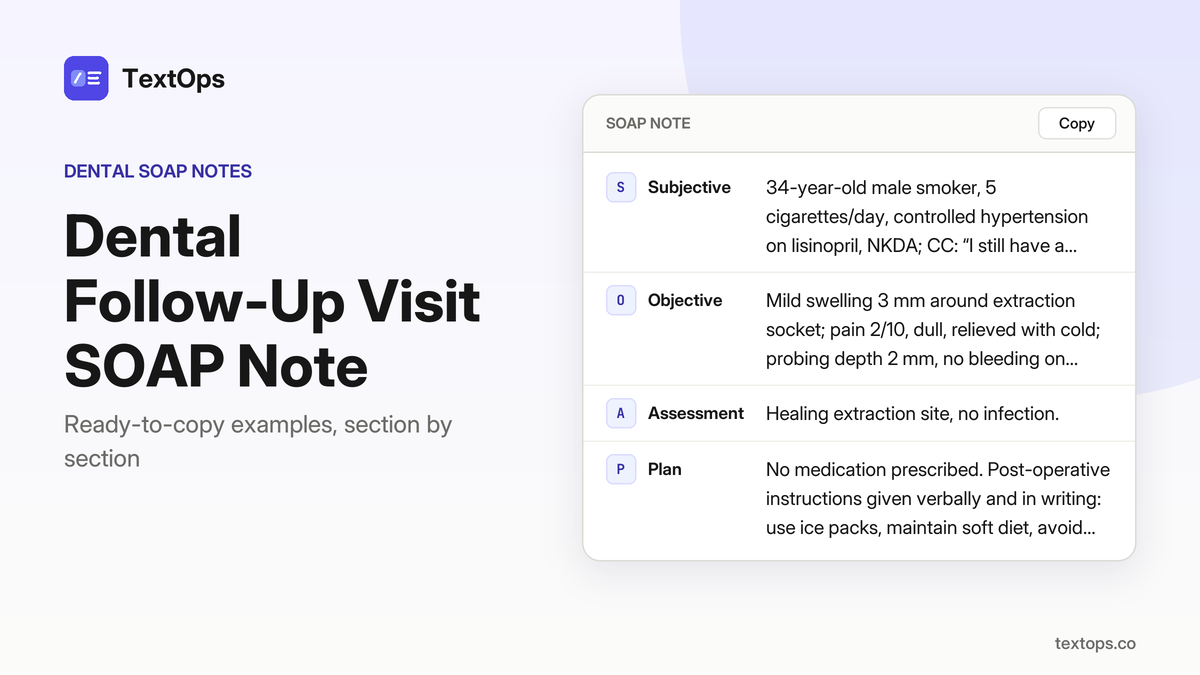
30-year-old female with type 2 diabetes on metformin, NKDA, reports “I’m still a bit sore, but the swelling is gone.” She has no other complaints, no fever, and denies trismus or lymphadenopathy.
OObjective
Extraction site of tooth #30 shows minimal erythema, no drainage, 2 mm probing depth, no bleeding on probing; periapical radiograph shows complete socket fill, no radiolucency; temperature 98.6 °F, extraoral exam WNL.
AAssessment
Healing extraction site, no infection.
PPlan
Continue oral hygiene, advise soft diet, no medications prescribed; schedule next visit in 2 weeks for final healing assessment.
50-year-old male, former smoker, NKDA, presents for a 2-week post-surgical follow-up after extraction of tooth #19; he reports that the incision still looks a little red but there is no pain or discomfort. He notes no swelling, no drainage, and that he has been following the soft-diet instructions. HPI: “The incision still looks a little red, but it’s not painful.”
OObjective
Extraoral examination shows no facial swelling, no cervical lymphadenopathy, and normal facial symmetry. Intraorally, the surgical flap has healed completely with mild erythema at the incision margin; no drainage or exudate is present. Probing depth is 3 mm with slight bleeding on probing; probing depth is within normal limits for the site. Periapical radiograph demonstrates bone remodeling at the extraction socket with no radiolucency or peri-apical pathology. Vital signs: temperature 98.7 °F, pulse and blood pressure within normal limits.
AAssessment
Post-surgical healing, uncomplicated, with no evidence of infection or delayed healing.
PPlan
Continue chlorhexidine gluconate 0.12% rinse twice daily, maintain soft diet, and avoid smoking for at least 48 hours. No additional medications prescribed. Patient instructed to report any new pain, swelling, or drainage immediately. Next visit scheduled for 4-week review to assess long-term socket healing and discuss potential implant placement if desired.
Re-Evaluation After Root Canal – 48-Year-Old Male, 6 Months
SOAP note
SSubjective
48-year-old male, daily low-dose aspirin, NKDA, reports “I still feel a little sensitivity when I drink cold.” HPI: 6-month post-root canal on tooth #16, no new symptoms.
OObjective
Extraoral: no trismus, no lymphadenopathy; Intraoral: crown intact, no fracture; periodontal: probing depth 2 mm, no BOP; Radiographic: periapical radiograph shows complete healing, no radiolucency; Vital signs: temperature 98.4 °F.
AAssessment
Healed root canal with residual pulpal sensitivity, supported by persistent cold-induced discomfort and normal periodontal and radiographic findings.
PPlan
Preserve existing crown; prescribe desensitizing toothpaste, use as needed for cold sensitivity; advise avoid very cold drinks; schedule next review in 12 months for long-term monitoring.
35-year-old female, hypothyroidism on levothyroxine, allergic to penicillin (rash); chief complaint: “My gums bleed a lot when I brush.” HPI: bleeding during brushing for 3 months, no pain, no swelling. PMH: hypothyroidism, no other systemic disease.
OObjective
Extraoral: no lymphadenopathy, trismus, or facial asymmetry. Intraoral: generalized gingival inflammation, BOP 30%, PD 4 mm at several sites. Periodontal chart: Stage I, Grade A periodontitis. Radiographs: periapical series, no bone loss. Temperature 98.5 °F.
AAssessment
Early periodontitis, generalized inflammation, supported by BOP 30 %, PD 4 mm, Stage I/Grade A findings, and absence of bone loss.
PPlan
Professional scaling and root planing performed; oral hygiene instruction given; chlorhexidine gluconate 0.12 % rinse, 15 mL, 30 s, twice daily for 2 weeks; no medication prescribed. Patient advised to maintain daily brushing with a soft-bristle brush, interdental cleaning, and to return in 4 weeks for re-evaluation of BOP and PD.
Dental Consultation – 40-Year-Old Male with Bruxism
SOAP note
SSubjective
40-year-old male, allergic to penicillin (rash); CC: “I’ve been grinding my teeth at night and my molars feel worn.” HPI: reports nocturnal grinding, mild discomfort and visible wear. PMH: no significant medical history.
OObjective
Extraoral: facial symmetry, no lymphadenopathy, no trismus. Intraoral: occlusal wear facets on #3 and #31, mild attrition; probing depth 1 mm, no BOP. Periodontal: WNL. Radiographic: periapical radiograph shows no periapical pathology. Vital signs: temperature 98.6 °F.
AAssessment
Mild bruxism with occlusal wear, supported by wear facets on #3 and #31, probing depth 1 mm, no BOP, and normal radiograph.
PPlan
Fabricate custom night guard, instruct patient on placement, use, and hygiene; advise stress-reduction techniques; schedule re-evaluation in 3 months. POI: avoid hard foods, maintain oral hygiene, report any new pain or swelling.
Dental Consultation – 18-Year-Old Female, First Permanent Molars
SOAP note
SSubjective
18-year-old female, controlled hypertension on lisinopril, NKDA; chief complaint: “My first permanent molar feels a bit loose when I chew”; history: no pain, no swelling, no trismus; medical history: hypertension, no allergies; no medications besides lisinopril; temperature 98.4 °F.
OObjective
Tooth #30 partially erupted, mobility grade 1, no BOP; periapical radiograph shows incomplete root formation, no periapical pathology; extraoral exam normal, no lymphadenopathy; intraoral soft tissues intact; vital signs stable.
AAssessment
Partially erupted first permanent molar with mild mobility, no periapical disease; diagnosis consistent with findings of incomplete root formation and grade 1 mobility.
PPlan
No anesthesia administered; observe and reinforce oral hygiene; schedule follow-up in 6 months; patient advised to report any increased mobility, pain, or swelling immediately.
Dental Consultation – 32-Year-Old Male, Dental Fear Management
SOAP note
SSubjective
32-year-old male, NKDA, reports “I’m still nervous about going back for the next appointment”; he has no significant medical history and denies any current medications or allergies.
OObjective
Extraoral examination reveals facial symmetry with no lymphadenopathy; intraoral surfaces show gingiva that is pink, without erythema or swelling. Probing depths are 2–3 mm with no bleeding on probing (BOP 0 %) and clinical attachment level (CAL 0 mm). Periapical radiographs of teeth #15 and #16 demonstrate no radiolucencies, caries, or periapical pathology, confirming healthy bone and tooth structure.
AAssessment
Dental anxiety, with no active periodontal or pulpal disease, as evidenced by normal periodontal probing, absence of BOP, and radiographs showing no pathology.
PPlan
Discussed a gradual exposure technique to reduce fear, scheduled the next visit in 4 weeks for restorative work on #15 and #16, provided written anxiety-management tips, and emphasized the importance of regular follow-up; no medications were prescribed.
Dental Consultation – 45-Year-Old Female, Implant vs. Bridge
SOAP note
SSubjective
45-year-old female, asthma controlled with albuterol PRN, NKDA, reports “I’m still unsure whether to go for the implant or the bridge” after extraction of tooth #30.
OObjective
Extraoral exam shows no swelling or lymphadenopathy; intraoral exam reveals tooth #30 missing, extraction site healing, mucosa pink, no infection; probing shows BOP 0%, PD 1–2 mm; panoramic radiograph demonstrates adequate bone height, no sinus involvement.
AAssessment
Post-extraction healing, no infection, with bone stock sufficient for implant placement but bridge still a viable option pending patient decision.
PPlan
Reviewed implant and bridge options, discussed potential bone grafting if needed, and advised patient to decide by next visit in 6 weeks; no medications prescribed, no anesthesia used.
60-year-old male smoker 5 cigarettes/day, NKDA, CC “I want to know how to keep my gums healthy,” HPI: mild bleeding on probing 10 %, probing depths 3–4 mm in several sites, moderate plaque index.
OObjective
Extraoral: no lymphadenopathy; Intraoral: gingiva pink, BOP 10 %, PD 3–4 mm, plaque moderate; bitewing radiograph shows interproximal caries on #24 and #25; periodontal chart: PSR 2 in multiple sextants.
AAssessment
Early periodontitis, Stage I, Grade A, evidenced by BOP, PD, and PSR findings.
PPlan
No anesthesia administered; provided individualized oral-hygiene instruction, prescribed chlorhexidine gluconate 0.12 % rinse 15 mL twice daily for 30 seconds, and scheduled next visit in 3 months for reassessment.
30-year-old female with seasonal allergies, NKDA, presents for post-procedure follow-up after a crown appeal; she reports “My insurance denied the crown I needed.” HPI: no pain, no sensitivity, no swelling.
OObjective
Extraoral: no swelling; Intraoral: tooth #15 restored with composite, no caries, no sensitivity; periapical radiograph of #15 shows no pathology; systemic signs: none.
AAssessment
Restorative need met, no active disease; diagnosis: composite restoration on #15 with no pathology.
PPlan
Reviewed appeal process with insurance, provided documentation of medical necessity, scheduled follow-up in 2 weeks to monitor healing; no drugs prescribed.
28-year-old female with type 2 diabetes on metformin, NKDA, presents with cosmetic concerns; she says, “I want my front teeth to look better.” HPI: no pain, no swelling, no systemic symptoms. PMH: diabetes controlled with metformin.
OObjective
Extraoral: facial symmetry, no swelling. Intraoral: tooth #7 shows mild enamel attrition, no caries; gingiva pink, BOP 0 %. Probing: PD 2 mm, CAL 0 mm. Radiograph: periapical of #7 shows no pathology. Periodontal chart: PSR 0.
AAssessment
Normal tooth with no pathology; cosmetic indication for enamel restoration.
PPlan
Discussed cosmetic options; patient prefers composite bonding. No anesthesia or medication given today. Scheduled bonding appointment in 4 weeks; instructed to maintain oral hygiene and avoid hard foods until bonding. RTC in 4 weeks for bonding.
34-year-old male, former smoker, NKDA, reports “my retainer keeps falling out and my front teeth feel loose.” History: retainer fractured at incisal edge, teeth have become loose since. PMH: none, no systemic signs.
OObjective
Tooth #8 shows 1 mm mild gingival recession, mobility grade 1, no caries or restoration; orthodontic retainer fractured at incisal edge; remaining teeth intact, periodontal probing WNL.
AAssessment
Orthodontic relapse with mild periodontal mobility, evidenced by incisal-edge retainer fracture, 1 mm recession, and grade 1 mobility on #8.
PPlan
Discussed options: re-orthodontic treatment and new retainer fabrication; patient consented to new clear retainer and referral to orthodontist for full evaluation. No anesthesia or drugs used. Next visit: orthodontist appointment to plan re-orthodontic therapy.
27-year-old male, takes low-dose aspirin, NKDA, reports “my tooth hurts when I drink cold coffee.” O: Tooth #30 has a completed root canal with a well-fitted post and crown; periapical radiograph shows a 2 mm radiolucency at the apex; no swelling or sinus tract; patient reports sharp, lingering pain on cold stimuli. A: Post-treatment pain due to cracked tooth with symptomatic irreversible pulpitis, supported by the radiolucency and cold-stimulus pain. P: Periapical radiograph taken to assess crack extent; temporary restoration placed over the crown margin; ibuprofen 400 mg PO q6h PRN; schedule endodontic retreatment if pain persists.
29-year-old male, hypothyroidism on levothyroxine, allergic to penicillin (rash); chief complaint: “My extraction site hurts and I can’t sleep.” HPI: post-extraction of tooth #15, reports dull, throbbing pain 5/10 at night, mild swelling 2 mm, no erythema or drainage, no systemic signs. PMH: hypothyroidism.
OObjective
Extraction site of #15 shows normal healing, dry socket absent; mild swelling 2 mm; no erythema, no purulent drainage; pain rating 5/10 at night; no systemic signs; no anesthesia administered.
AAssessment
Post-extraction pain with mild edema, consistent with normal healing and mild inflammatory response.
PPlan
Advised ice packs to cheek, soft diet, maintain oral hygiene with chlorhexidine 0.12% rinse 15 mL for 30 s twice daily; prescribed ibuprofen 400 mg PO q6h PRN for pain; instructed to monitor swelling and report if worsening; next visit in 7 days for reassessment.
46-year-old female, no significant medical history, allergic to penicillin (rash). Chief complaint: “My implant is loose and painful.” Intermittent sharp pain when chewing. No systemic signs.
OObjective
Extraoral: normal. Intraoral: implant in #30 mobile, no swelling or drainage. Periodontal: peri-implant bone loss 2 mm from crest. Radiographic: panoramic shows 3 mm radiolucent zone around the fixture. No additional tests performed.
AAssessment
Implant failure with peri-implantitis, evidenced by implant mobility, a 3 mm radiolucent zone on panoramic, and 2 mm crestal bone loss.
PPlan
Anesthesia: 2% lidocaine with 1:100,000 epinephrine, 1.8 mL (1 cartridge), IANB. Treatment: removed failed implant, curetted peri-implant bone, discussed bone grafting and new implant placement plan. No drugs prescribed. Next visit: bone graft evaluation and implant placement.
38-year-old female, controlled hypertension on lisinopril, NKDA, reports “my retainer keeps slipping and my front teeth feel misaligned.” She has a fractured orthodontic retainer at the incisal edge of tooth #8 and notes a slight shift in alignment.
OObjective
Extraoral: facial symmetry normal. Intraoral: upper central incisor #8 shows 1 mm gingival recession, mobility grade 1, no caries or restoration. Retainer fractured at incisal edge. Periodontal: BOP negative, probing depths <3 mm. No other findings.
AAssessment
Orthodontic relapse with mild periodontal mobility, supported by incisal retainer fracture, 1 mm recession, and grade 1 mobility on #8.
PPlan
Discussed new retainer fabrication and referral to orthodontist for comprehensive assessment. No anesthesia or drugs administered. Advised oral hygiene reinforcement and scheduled follow-up in 4 weeks to evaluate retainer fit and periodontal status.
Endodontic Consultation – 38-Year-Old Male, Severe Pain
SOAP note
SSubjective
38-year-old male, no significant medical history, NKDA, reports “My tooth hurts like a knife when I bite.” HPI: sharp, throbbing pain on biting with lingering pain after biting; no swelling or sinus tract.
OObjective
Tooth #19 shows deep caries extending to the outer dentin on the mesial surface; PA radiograph reveals a 4 mm radiolucency at the apex; no other findings.
AAssessment
Symptomatic irreversible pulpitis with acute apical periodontitis, supported by deep caries, radiolucency, and biting pain.
PPlan
Infiltration of 4% articaine with 1:100,000 epinephrine, 1.8 mL (1 cartridge) performed; plan root canal therapy; prescribed ibuprofen 400 mg PO q6h PRN for pain; instructed to avoid hard foods, maintain oral hygiene, and return for RCT appointment.
22-year-old female, asthma (albuterol PRN), NKDA, CC: “I fell and my front tooth looks broken.” HPI: fall 2 days ago, mild pain, no swelling. O: Extraoral normal; intraoral shows fractured labial surface of tooth #8, enamel and superficial dentin, no pulp exposure, tooth stable, no mobility, no periodontal pocket; panoramic radiograph shows no root fracture or periapical pathology. A: Uncomplicated crown fracture of tooth #8, no pulp involvement. P: Local anesthesia with 2% lidocaine 1:100,000, 1.8 mL infiltration; composite resin restoration placed on #8; advised to avoid hard foods for 48 h, maintain oral hygiene, return if pain or sensitivity develops.
Dental Consultation – 22-Year-Old Male, Avulsion
SOAP note
SSubjective
22-year-old male, smoker, NKDA; CC: "My tooth was knocked out when I fell." HPI: avulsion of tooth #9, immediately stored in normal saline, no other trauma noted.
OObjective
Extraoral exam normal; intraoral exam shows avulsed tooth #9, no swelling or sinus tract; PA radiograph shows no root fracture, no periodontal ligament damage, no root resorption.
AAssessment
Avulsed tooth #9 with pulpal necrosis likely, no root resorption.
PPlan
Reimplanted tooth #9 with 2% lidocaine 1:100,000, 1.8 mL infiltration; stabilized with 0.5 mm non-rigid splint for 7 days; prescribed Amoxicillin 500 mg PO TID for 7 days; instructed to maintain oral hygiene, avoid chewing on that side, and return for re-evaluation in 7 days.
24-year-old male, seasonal allergies, NKDA, reports “My tooth fell out and I reimplanted it, but it’s now loose and painful.” He reimplanted tooth #9 three days ago; now it is mobile and tender to percussion.
OObjective
Extraoral exam normal; intraoral exam shows no other pathology. Tooth #9 is mobile, tender on percussion. Radiograph shows root resorption and a periapical radiolucency. No swelling or sinus tract noted.
AAssessment
Failed reimplantation with acute apical periodontitis and root resorption of tooth #9.
PPlan
Provisional extraction of tooth #9 performed; patient instructed to maintain oral hygiene and avoid trauma. Prescribed Ibuprofen 400 mg PO q6h PRN for 3 days. Advised to return if pain worsens or signs of infection develop.
Orthodontic & Retainers
Orthodontic Consultation – 12-Year-Old Male
SOAP note
SSubjective
12-year-old male, type 2 diabetes on metformin, NKDA, reports “I want to straighten my teeth.” Mild crowding of upper incisors, 4 mm overjet, 2 mm overbite, excellent oral hygiene (plaque index 0), no caries or restorations.
OObjective
Extraoral symmetry normal, no lip or cheek asymmetry. Intraoral: mild upper incisor crowding, overjet 4 mm, overbite 2 mm, no periodontal pockets >3 mm. Panoramic radiograph: all permanent teeth present, no root resorption, no impacted teeth, cephalometric analysis shows no skeletal discrepancy.
AAssessment
Mild dental malocclusion, Class I with mild crowding, no active caries.
PPlan
Orthodontic evaluation completed; study models and photographs taken. Fixed appliance indicated with a 0.022×0.028-inch slot system; retainers to be fabricated after treatment. No drugs or anesthesia administered.
What Is a Dental Consultation?
A dental consultation is a focused encounter requested by a patient or referring provider to obtain a diagnosis, opinion, or treatment options. The visit stands alone and may not result in immediate intervention. Its scope includes chief complaint, relevant history, focused exam, and a concise assessment with a tailored plan.
SOAP Note Structure and Key Content for a Consultation
Subjective & Objective
Chief complaint (CC) in patient’s words.
History of present illness (HPI): onset, duration, character, triggers, relief, numeric pain score.
Next-visit recommendation: purpose, date, and any interim care.
Documenting Treatment Options
Record every treatment option discussed, including no-treatment alternatives, in the Plan. List each option, its risks and benefits, and the patient’s choice and reasoning. Use concise, objective language: “Option A: root-canal therapy – risk of postoperative pain, benefit of tooth preservation; patient prefers.” Follow the same format for every option, ensuring the note reflects the full spectrum of care discussed.
Documenting Patient Preferences
Record the patient’s stated preferences, noting the specific choice, the rationale, and any concerns raised. Capture verbal agreements and written consents, quoting exact wording when it informs the decision. Document influencing factors such as cost, treatment duration, aesthetic impact, or medical contraindications. Note any expressed hesitation or preference for no-treatment, and the clinician’s explanation of risks and benefits. Include the patient’s final decision and the agreed next step, ensuring the note reflects the full decision-making process.
Documenting Follow-Up Recommendations
Record the next-visit date and purpose in the first line of the plan: “RTC in 4 weeks for periodontal re-evaluation.” Add home-care instructions: “Brush twice daily with fluoridated toothpaste; use 0.12 % chlorhexidine rinse 30 s twice daily.” Note any interim care: “Apply topical fluoride gel at home.” Document referrals or additional tests: “Refer to periodontics for scaling and root planing; schedule CBCT in 2 weeks for bone assessment.” Each element should be in a single, concise sentence within the plan section.
Distinguishing a Consultation Note from Other Dental Notes
A consultation note documents a stand-alone assessment with no immediate procedure, focusing on diagnosis and treatment options. A treatment-plan note records definitive care and procedural details, including anesthesia, instrumentation, and postoperative instructions. A follow-up note captures healing after a completed intervention, noting changes from baseline and next-step care. The consultation emphasizes clinical findings, differential diagnosis, and options discussed; it omits operative steps or materials used.
These examples show structure and wording only. Record what you actually found and did, and follow your practice’s documentation requirements.
Dr. Rahul Joshi is a Specialist Orthodontist with extensive clinical experience in orthodontics, dentofacial orthopaedics, and dental aesthetics. Holding a Master of Dental Surgery (MDS) in Orthodontics and Dentofacial Orthopaedics and a Bachelor of Dental Surgery (BDS) from Manipal Academy of Higher Education, he brings expertise in orthodontic treatment planning, teeth alignment, and Invisalign treatment. With professional experience across India and the Netherlands, Dr. Joshi combines clinical knowledge with practical experience in orthodontic care, dental aesthetics, and improving patients' oral health.
Master of Dental Surgery (MDS) in Orthodontics and Dentofacial Orthopaedics — Manipal Academy of Higher Education
Bachelor of Dental Surgery (BDS) — Manipal Academy of Higher Education
Stop retyping your templates
Save any template to TextOps once, then insert it anywhere on the web without retyping. Share it with your team so everyone uses the same wording.